Showing posts with label Selling a Home. Show all posts
Image : Houseblogger.com

How Should I Take Ownership of the Property I am Buying?

Real property can be incredibly valuable and the question of how parties can take ownership of their property is important. The form of ownership taken -- the vesting of title -- will determine who may sign various documents involving the property and future rights of the parties to the transaction. These rights involve such matters as: real property taxes, income taxes, inheritance and gift taxes, transferability of title and exposure to creditor’s claims. Also, how title is vested can have significant probate implications in the event of death.

The Land Title Association (LTA) advises those purchasing real property to give careful consideration to the manner in which title will be held. Buyers may wish to consult legal counsel to determine the most advantageous form of ownership for their particular situation, especially in cases of multiple owners of a single property.

The LTA has provided the following definitions of common vesting as an informational overview. Consumers should not rely on these as legal definitions. The Association urges real property purchasers to carefully consider their titling decision prior to closing, and to seek counsel should they be unfamiliar with the most suitable ownership choice for their particular situation.

Common Methods of Holding Title

SOLE OWNERSHIP
Sole ownership may be described as ownership by an individual or other entity capable of acquiring title. Examples of common vesting in cases of sole ownership are:
  1. A Single Man/Woman:
A man or woman who has not been legally married. For example: Bruce Buyer, a single man.
  1. An Unmarried Man/Woman:
Image : pasadenashortsaleblog.com

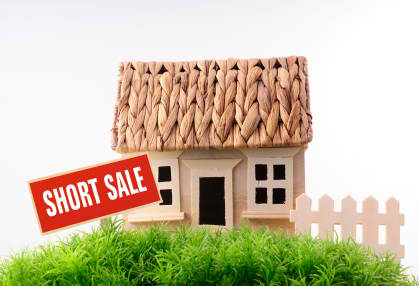
An increase in foreclosure rates will inevitably bring with it an increase in short sales. But what is a short sale?

A short sale happens when you sell your house for less than your remaining mortgage balance, the proceeds of which go to the lender and in return the lender forgives the remaining balance. Selling your home as a short sale is one way to avoid foreclosure.

As a general rule, lenders lose money when they foreclose on a property. Consequently, they would rather not have to foreclose if it can be avoided. A short sale represents an opportunity to cut their losses because a short sale usually allows them to recoup more of the cost of the loan than a foreclosure process would.

However, don’t think that a short sale is an easy thing to accomplish. In order to get permission for a short sale, you must provide documentation showing a genuine financial hardship. And don’t think that the decision for accepting a short sale is solely in the hands of the lender. Sure the lender must first agree, but this is not the final word. If there is mortgage insurance involved, this company also gets input on the decision. If there is an investor backing the mortgage, they also get input as to whether to accept a short sale.
The transaction process for a short sale can be rather cumbersome as well, whether you’re on the buying or selling side. Many short sales fail due to additional demands by the lender, such as requiring the broker to reduce his or her commission and/or that the seller signs a document requiring him or her to pay back the shortfall.

If you’re on the selling side of a short sale, consider having your agent or other experienced professional negotiate with your lender for a better deal. And remember, if the lender does accept a short sale and forgives part of your debt, that is considered taxable income and you must declare it as such to the IRS.

The price is the first thing buyers notice about your property. If you set your price too high, then the chance of alienating buyers is higher. 

You want your house to be taken seriously, and the asking price reflects how serious you are about selling your home.

Several factors will contribute to your final decision. First, you should compare your house to others that are in the market. 

If you use an agent, he/she will provide you with a CMA (Comparative Market Analysis). 

The CMA will reflect the following:
  • houses in your price range and area that were sold within the last half-year
  • asking and selling prices of houses
  • current inventory of houses on the market
  • features of each house on the market
From the CMA, you will learn the difference between the asking price and selling price for all homes sold, the condition of the market, and other houses comparable to yours.

Also, try to find out what types of houses are selling and see if it applies to your area. Buyers follow trends, and these trends can help you set your price.

Always be realistic. Understand and set your price to reflect the current market situation.
Image : nanediniz.blogspot.com

  1. Analyze why you are selling - If you understand your motives, you will be able to better negotiate and to get what it is that you want, whether it be a quick sale, high price, or somewhere in the middle.

  1. Prepare your home for the buyer - Maximize the strengths of your property and fix up its weaknesses. You want the buyer to walk away from your home with a lasting good impression.

  1. Find a good real estate agent that understands your needs - Make sure that your agent is loyal to you, and can negotiate to help you achieve your goals. In addition, they should be assertive and honest with both you and the buyer.

  1. Be prepared for negotiation - Learn and understand your buyer’s situation; what are their motives? Can you demand a big deposit from them? Try to lock in the buyer so that the deal goes through.

  1. Negotiate for the best price and the best terms - Learn how to counter offer to get maximum value from every offer.

  1. Make sure the contract is accurate and complete - Be honest with your disclosures; you do not want to lose the deal because you were lying or diminishing your home’s defects. Insist the buyers get a professional inspection. This will protect both you and the buyer.
Image : psychologicalscience.org

If you want buyers to be interested in your home, you need to show it in its best light. A good first impression can influence a buyer both emotionally and visually, thus prompting them to make an offer. In addition, what the buyer first sees is what they think of when they consider the asking price.

A bad first impression can dissuade a potential buyer. Don’t show your property until it’s all fixed up. You do not want to give buyers the chance to use the negative first impression they have as means of negotiation.

Ask around for the opinions others have of your home. Real estate agents who see houses everyday can give solid advice on what needs to be done. Consider what architects or landscape designers have to say. What you need are objective opinions, and it’s sometimes hard to separate the personal and emotional ties you have for the home from the property itself.

Typically, there are some general fix ups that need to be done both outside and on the inside. As a seller, you should consider the following:
  • Landscaping - Has the front yard been maintained? Are areas of the house visible to the street in good condition?
  • Cleaning or Redoing the driveway - Is your driveway cluttered with toys, tools, trash etc.?
  • Painting - Does both the exterior and the interior look like they have been well taken care of?
  • Carpeting - Does the carpet have stains? Or does the carpet look old and dirty?
by Images_of_Money

FSBO (pronounced fizz-bo), or For Sale By Owner, is a way of selling your home without the use of a professional real estate agent or broker. The idea behind FSBO is that by selling your home yourself, you save the approximate 6% that would be the agents’ commission.

6% may not sound like a lot, but it can add up, especially on more expensive homes. But before you run off and decide to sell your home FSBO, you must remember that to get a savings like that, there must be a cost. So what’s the catch? Selling FSBO is hard. A lot harder.

Only about 10% of sellers that decide to do FSBO are successful at it. And not all of them end up saving themselves money. FSBO sellers often end up accepting a lower price for their home than they would with an agent.

There are of course other issues as well. Can you afford to make selling your home your full-time job? Because for a lot of FSBO sellers, that’s exactly what it is. Do you have the time and capital to spend on the marketing, advertising, inspections, paperwork, phone calls, showings, and problems that come up when any home is sold?

Selling with a professional agent also has other advantages. An agent can get your home listed on the MLS (Multiple Listing Service) and other popular websites where not only homebuyers but also other agents can easily find it. Professional real estate agents also have an extensive network that allows them to more easily find a buyer.

So before you decide to sell your home yourself, thoughtfully consider just how much time and effort you can spare for selling your home, as well as how important it is that your home sell sooner rather than later.
north carolina real estate,real estate nc,kb investments and realty llc,kbir holdings,wendell real estate,raleigh real estate
Image : lendingcentral.com
When reading an offer, keep in mind that you are out to get the best price AND the best terms for you. If you focus solely on the price, you may overlook terms that could be favorable to you as a buyer.

Some terms that may work in your favor:

  • higher-than-market-interest in a second mortgage for your home
  • the buyer will pay for most or all of the closing costs
  • the buyer will take care of any repairs
  • quick close - the buyer is pre-approved and ready to close in a timeframe that best suits you
  • all-cash deal
When reading through offers, remember to look at the whole package. Take the time that you need to assess what is being offered and if it meets your needs.